FRP vs. Steel Grating: Choosing the Right Material for Your Application
Fiberglass and steel grating each have distinct advantages. This guide breaks down load capacity, weight, chemical resistance, and total cost of ownership to help you decide.
Fiberglass reinforced plastic (FRP) grating has captured a significant share of the industrial flooring market over the past 30 years. But is it always the right choice? Here we compare FRP and steel head-to-head across the factors that matter most.
Weight
FRP grating weighs approximately 3–4 kg/m² compared to 18–25 kg/m² for equivalent hot-dip galvanized steel bar grating. This weight saving reduces structure costs and simplifies installation, particularly in elevated or offshore locations.
Corrosion Resistance
FRP is inherently corrosion-resistant and does not require any coating or ongoing maintenance in most chemical environments. Steel grating requires a protective coating (galvanizing or paint) and periodic inspection. In highly aggressive chloride environments, FRP has a clear lifecycle advantage.
Load Capacity
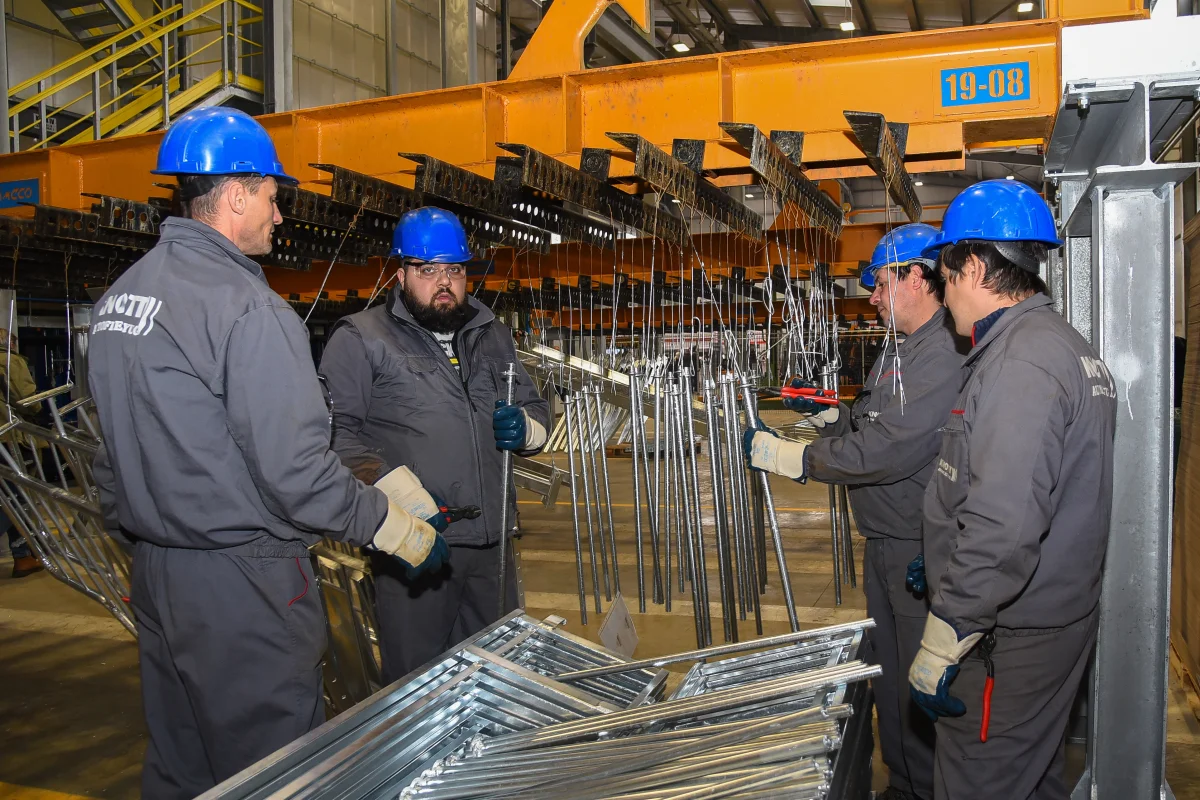
Steel bar grating has significantly higher load capacity and stiffness per unit weight. For spans exceeding 1500mm or under heavy wheeled loads, steel is generally the superior choice.
Electrical Conductivity
FRP is an electrical insulator, making it mandatory in areas with live electrical equipment or where electrostatic discharge is a concern. Steel must be grounded in these applications.
Cost
FRP typically has a higher initial material cost than galvanized steel grating. However, when maintenance costs over a 25-year design life are factored in, FRP is often cost-competitive or cheaper in aggressive environments.
Making the Right Choice
Steel is generally preferred for: high load applications, tight budgets, good access for maintenance. FRP is preferred for: chemical or marine environments, electrical isolation requirements, weight-critical structures, and maintenance-free design lives.